DMR, YSF, and the Hotspot Revelation
February 3, 2026 - Reading time: 7 minutes
My Journey into Digital Voice
Getting started with digital voice, specifically DMR and YSF, turned out to be a bit more turbulent than my first steps on local analog repeaters.
Wrestling with Codeplugs and Repeater Etiquette
My first venture into DMR was through local repeaters. Honestly, figuring out the codeplug felt like trying to decode the Enigma machine. It was a steep learning curve and felt pretty limiting at first, mostly because the static Talkgroups (TGs) on the repeaters near me were usually silent.
Once I realized these same repeaters could serve up dynamic TGs (channels I could actually choose myself) the whole world felt like it was just a button push away. It was a total game changer.
But then, the anxiety hit. My usual hesitation about social protocol flared up, and I became self-conscious about which TGs to dial up. I kept wondering: Am I wasting a public resource on my silly experiments? Will people think I’m lame for calling CQ on the HRCC TG? Does following KI6NAZ give away how much of a newb I really am?
I knew my local club members would just tell me to "go for it," but I still found myself holding back. I had also committed to the Yaesu ecosystem early on, choosing System Fusion (YSF) over D-STAR because of the local support. Yet, I still found YSF traffic hard to find and constantly doubted my own configuration as the culprit.
The "Cheating" Mindset
I’d heard about using digital hotspots to bypass repeaters entirely, but I resisted at first. It felt like cheating. Since the 90s, I’ve communicated with people globally via IRC, BBS, ICQ, and AIM, so routing my radio over the internet didn't feel much different in theory.
However, the more I spoke with other hams about digital modes, the more I heard about the fun they were having exploring talk groups at night. I looked into commercial hotspots, but the $150 to $400 price range didn't seem to offer enough added value to justify the cost. That kept me away for a while.
The Homebrew Solution
Since I’m an engineer and a "homelabber" for fun, I usually have a few Raspberry Pis floating around. I knew there had to be a DIY path.
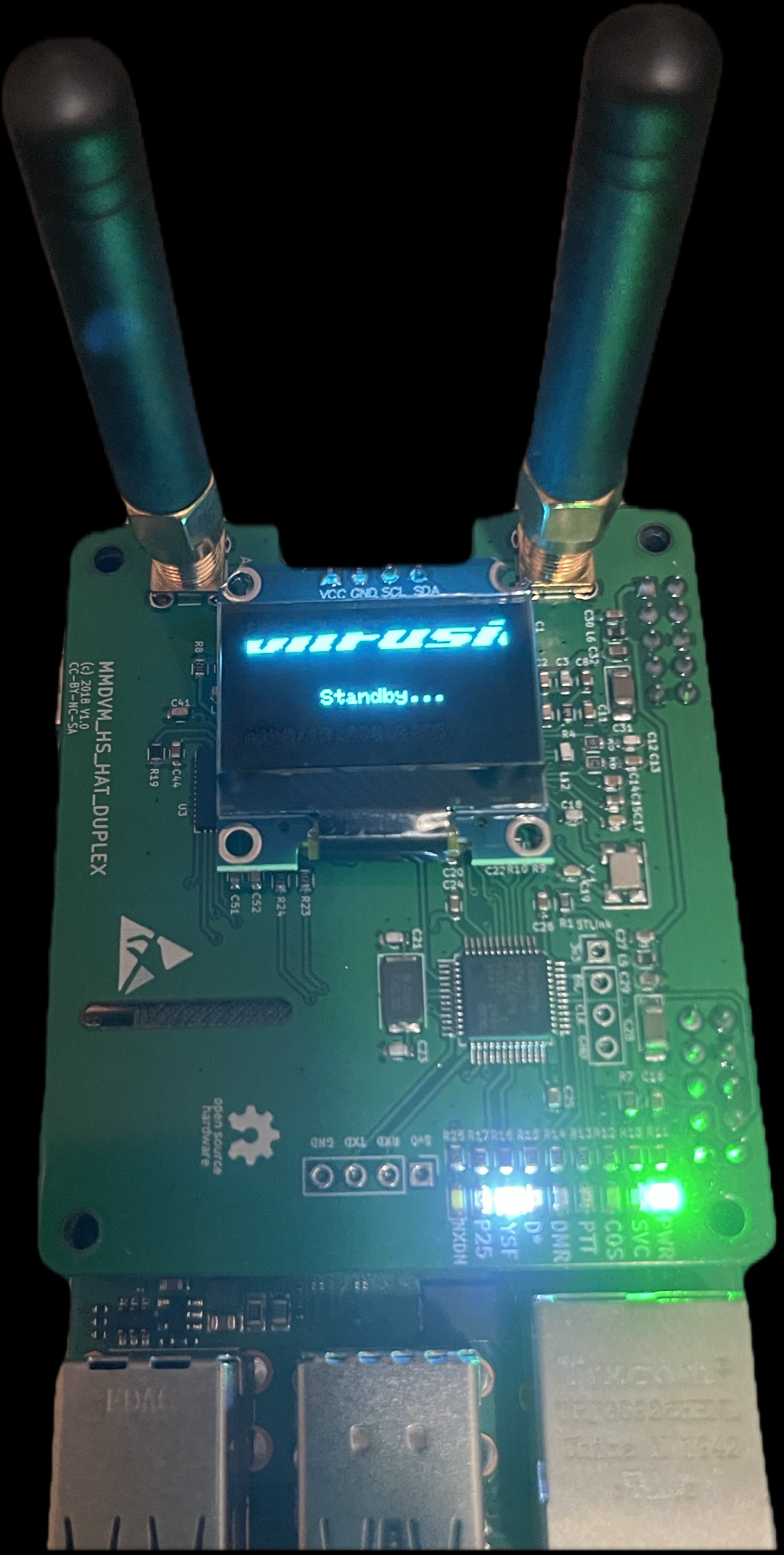
I quickly found Pi-Star and the WPSD project and started looking at hardware. Most Raspberry Pi "hats" are simplex boards (single antenna/radio). While that works for most, I preferred the idea of a "duplex" board for faster switching and better monitoring. The price jump was only about $20, and since I hate limiting my options, I grabbed a duplex board from AURSINC. Total buy-in was about $60 since I already had the Pi.
WPSD vs. Pi-Star
Pi-Star and WPSD seem to be the two main contenders. I heard WPSD had a better interface, though it does require a bit more horsepower (if you’re on a Pi 3 or Zero W, Pi-Star is the safer bet). Both projects have great documentation, so I won't rehash that here, but I managed to get the software configured and running before the 3D printer had even finished the case!
The Epiphany
Once I linked my radios and saw this little device connecting to digital TGs over the internet, exactly how the repeaters do, my perspective shifted. My "snobbish" view of hotspots being a form of "cheating" was totally off base.
More importantly, it cured my anxiety. I’m no longer worried about overstaying my welcome on a public repeater. There are several amazing communities to find in digital voice, it's definitely worth the trip. I’ve been exploring new TGs and YSF rooms every evening, and I feel like I’ve barely scratched the surface.
What’s Next?
I’m just getting started. Digital radio hasn’t replaced analog for me, there’s still nothing like pulling a voice out of the static on HF, but it has added a great new dimension to the shack. It’s proof that this century-old hobby can still stay on the cutting edge. Plus, I have another cool Pi-based project blinking in my office.
73, Garrett - W6ILO
Note: I have a set of Amazon affiliate links below. These don't cost you anything to use and don't increase the price of anything you purchase, but they do help support my infrastructure costs via a commission from Amazon. I would be very grateful just for considering using them if you decide to purchase anything discussed here. Thank you!
-
Amazon link for duplex multi-digital mode pi hat - https://amzn.to/4rxzw9f
-
Amazon link for Pi4 4gb kit - https://amzn.to/45OQZBI
-
Amazon link for MicroSD card for the pi - https://amzn.to/4qrHq3e